Why faster kinship placements matter — and how Idaho just took a step forward

July 11, 2025
Monty Prow, DHW Deputy Director

When children are removed from their homes for safety reasons, the next best option is often a familiar face — a grandparent, an aunt, or a close family friend, for example. These kinship placements provide children with a sense of stability, reduce trauma, and help preserve connections to family, culture, and community. But historically, even relatives willing to step in have faced lengthy licensing and approval processes that delay placement.

That’s starting to change in Idaho.

Effective July 1, new rules enacted by the Department of Health and Welfare (DHW) create a separate path for kinship licensure. This change comes in response to House Bill 245, which passed during the 2025 legislative session with bipartisan support, mirroring the national model being used around the country.

This marks a meaningful shift. 

Under the new rule, eligible kin can follow a separate and expedited licensing path. Instead of completing the full foster care licensing process, they undergo a standard background check and an abbreviated caregiver assessment focused solely on their ability to meet the child’s needs — and how the Department can support them. It’s a faster, more focused process that still protects child safety.

This isn’t just compassionate — it’s strategic. Research shows that children placed with kin experience fewer disruptions, are less likely to re-enter foster care, and often have better long-term outcomes. Supporting kin also means supporting families in crisis during some of their most vulnerable moments.

Together, these changes reflect Idaho’s growing commitment to making the foster care system more responsive, flexible, and centered on what’s best for children.

Monty Prow is deputy director of the Division of Child, Youth, and Family Services at DHW.

The Idaho Department of Health and Welfare is dedicated to strengthening the health, safety, and independence of Idahoans. Learn more at healthandwelfare.idaho.gov.

Join the Discussion

Please note the following terms of participation in commenting on the DHW Voice blog.

To ensure a productive discussion you agree to post only comments directly related to this post and to refrain from posting obscenities; threatening, abusive or discriminatory language; sexually explicit material; and other material that would violate the law if published here; promotional content; or private information such as phone numbers or addresses. DHW reserves the right to screen and remove inappropriate comments.

Prevention workers bring hope and stability to Idaho communities

July 9, 2025
Jean Fisher, Youth Safety and Permenancy

Earlier this summer, the Department of Health and Welfare (DHW) launched a hiring campaign to fill 63 new positions aimed at improving outcomes for children and families across the state. 

While some of the new roles strengthen traditional response services, many are designed with a different goal in mind—keeping families together before a crisis ever occurs.

More than 40 of those new positions have already been filled, but there’s still time to be part of the department’s shift toward more prevention-focused child welfare work. DHW is continuing to recruit passionate, community-minded professionals who want to make a difference.

If you’re ready to help keep families strong and connected, explore the remaining openings and apply today.

These new prevention-focused roles will help identify families at risk and offer the support they need to stay stable, connected, and safe. That might mean helping a parent find mental health services, connecting a caregiver with housing assistance, or working alongside schools to ensure a child’s needs are met at home and in the classroom.

This approach isn’t just compassionate—it’s strategic. Research shows that prevention services can reduce the need for foster care placements, shorten the length of time children remain in care, and improve long-term outcomes for families. It’s also more cost-effective in the long run, reducing the burden on an already strained system.

That’s why Gov. Brad Little and Idaho Legislature invested $23 million into this effort, and why the Department of Health and Welfare launched its statewide hiring campaign to bring the strategy to life. 

The new positions include family services workers, community resource workers, and prevention coordinators—roles that will be embedded in communities across the state. These professionals will work closely with schools, clinics, and nonprofit partners to build a safety net around families in need.

This shift toward prevention represents a culture change within the child welfare system—one that prioritizes early help over late-stage intervention. It’s about seeing the signs, stepping in with support, and empowering families.

To learn more about these new roles or apply, visit: https://statecareers.idaho.gov/search/human-services/jobs?q=dhw

Jean Fisher is Division Administrator for Youth Safety and Permanency at the Department of Health and Welfare. 

The Idaho Department of Health and Welfare is dedicated to strengthening the health, safety, and independence of Idahoans. Learn more at healthandwelfare.idaho.gov.
Join the Discussion

Please note the following terms of participation in commenting on the DHW Voice blog.

To ensure a productive discussion you agree to post only comments directly related to this post and to refrain from posting obscenities; threatening, abusive or discriminatory language; sexually explicit material; and other material that would violate the law if published here; promotional content; or private information such as phone numbers or addresses. DHW reserves the right to screen and remove inappropriate comments.

Mounting heat poses summer health hazards

June 30, 2025
Dr. Kathryn Turner, Division of Public Health

As summer arrives in Idaho, so do a series of seasonal health hazards. With the first heat-related deaths of the year already reported this June, and with temps forecasted to be in the upper 90s and possibly 100s this week, it’s a critical time to talk about how to stay safe in rising temperatures, around water, and during wildfire season.

Heat-related illness: know the warning signs

Heatstroke is the most serious heat-related illness. It can develop quickly, especially in high temperatures with little shade or hydration. Symptoms include a high body temperature, confusion, dizziness, red or hot skin, and fainting. This is a medical emergency—call 911, move the person to a cooler place, and cool them with wet cloths or a cold bath.

Heat exhaustion may come first, with signs like fatigue, muscle cramps, nausea, and clammy skin. Resting in a cool place, drinking water, and using cold cloths can help.

To stay safe in the heat:

  • Drink water often—don’t wait until you’re thirsty.
  • Avoid outdoor activity during the hottest part of the day.
  • Wear lightweight clothing, sunscreen, and a wide-brimmed hat.
  • Take frequent breaks in the shade or indoors.

Harmful algal blooms: hidden water hazards

Summer also brings peak conditions for cyanobacterial harmful algal blooms (cyanoHABs), also known as blue-green algae. Cyanobacteria are naturally found in water but can produce dangerous toxins under the right conditions—especially warm, still water.

Swallowing or swimming in affected water can cause stomach pain, nausea, vomiting, and skin or eye irritation. Pets, livestock, and wildlife are particularly vulnerable because they’re more likely to swim in or drink contaminated water. If your pet is exposed, wash them immediately with clean water and soap, and contact a veterinarian.

Watch for water that looks or smells suspicious. Blooms may resemble pea soup, spilled paint, green mats, or foamy scum, and may have a foul odor. Follow these tips to protect yourself and your pets:

When in doubt, stay out—and keep pets and livestock out, too. Never drink or cook with water that could contain a bloom—boiling or filtering won’t remove the toxins.

To report a suspected bloom, call (866) 671-5385 or email algae@deq.idaho.gov.

Be ready for wildfire smoke

As wildfire season begins, air quality can quickly worsen due to drifting smoke. Even healthy people can experience symptoms like coughing and shortness of breath. On smoky days, limit time outdoors, avoid vigorous activity, and check for current smoke information: https://idsmoke.blogspot.com/

A safe summer starts with awareness

Idaho summers are a great time to enjoy a variety of outdoor activities. With some preparation and smart choices, we can reduce our risk and protect our families, pets, and communities from preventable summer health threats.

Dr. Kathryn Turner is deputy state epidemiologist in the Division of Public Health.

The Idaho Department of Health and Welfare is dedicated to strengthening the health, safety, and independence of Idahoans. Learn more at healthandwelfare.idaho.gov.
Join the Discussion

Please note the following terms of participation in commenting on the DHW Voice blog.

To ensure a productive discussion you agree to post only comments directly related to this post and to refrain from posting obscenities; threatening, abusive or discriminatory language; sexually explicit material; and other material that would violate the law if published here; promotional content; or private information such as phone numbers or addresses. DHW reserves the right to screen and remove inappropriate comments.

Prioritizing Permanency: Reflecting on 250 Adoptions

June 23, 2025
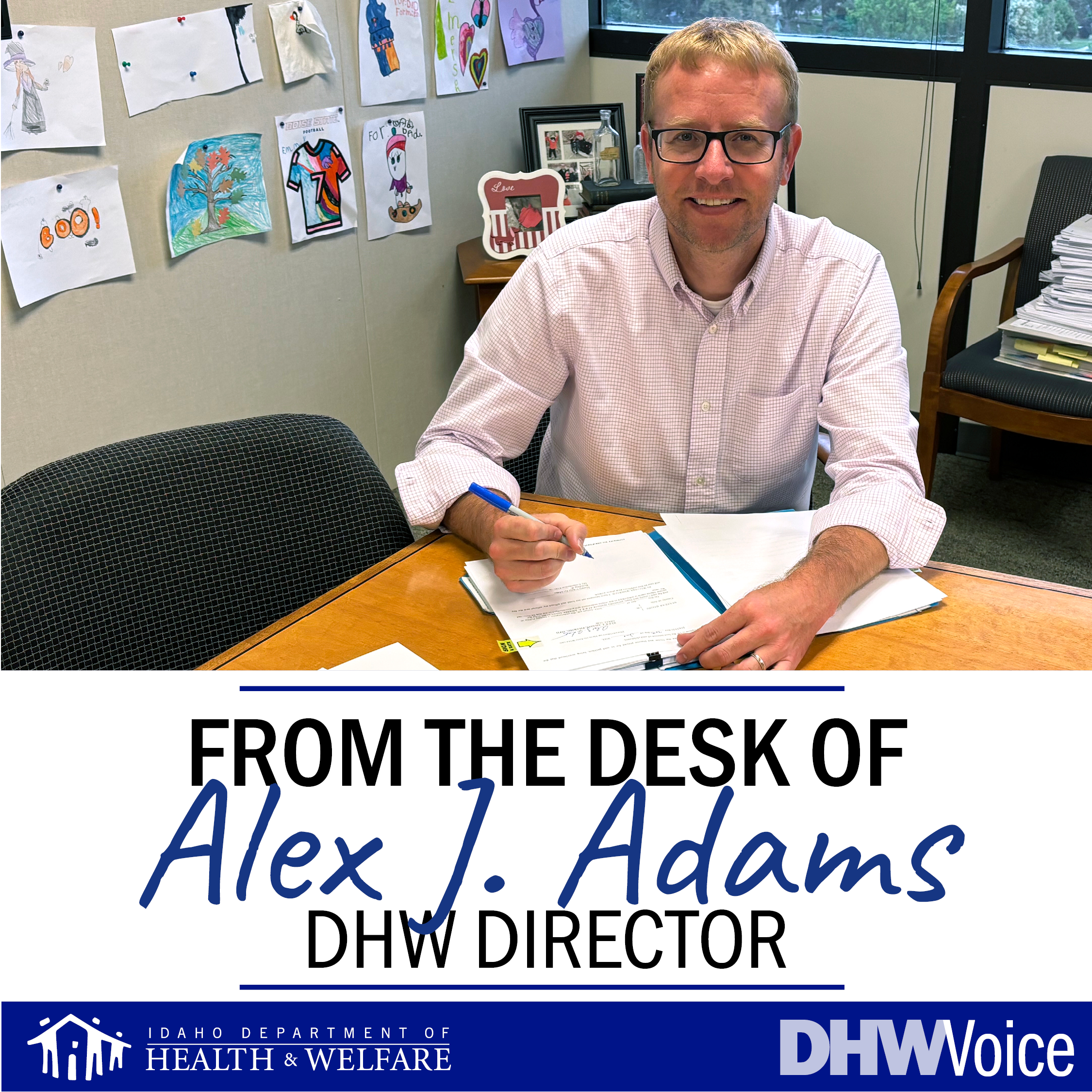
DHW Director Alex J. Adams

Over the past year, I’ve pursued a mission of accountability, transparency, fiscal responsibility, and improving the lives of Idaho’s vulnerable children in need.

Central to that has been strengthening child welfare—expanding foster care through legislative reforms that voluntarily extend care to age 23, supporting and strengthening kinship care, and accelerating permanency timelines. We launched the Office of Faith Initiatives, simplified licensing, and eliminated short term rentals as foster placements—while growing licensed foster homes at a record pace.

Idaho has also seen a notable improvement in foster parent recruitment and retention in recent years. The number of foster parents ending their licenses has declined year-over-year since 2023.  Meanwhile, we already had 66 more foster families sign up so far in fiscal year 2025 than our previous high in fiscal year 2024.  

These improved recruitment and retention numbers signal progress in keeping foster families engaged and supported in their role of helping keep Idaho families together. And taken together, we now have 95 families to care for every 100 foster kids, up from 74 families last June.

The Legislature’s historic $23.2 million investment and addition of 63 new staff singled a major leap forward in prevention and home-based care.

I oversee a wide range of programs that touch every corner of our state and every stage of life.

But few responsibilities have brought me as much personal fulfillment as signing the official documents that finalize a child’s adoption.

Recently, I signed my 250th adoption—each one represents a child’s permanent connection to a loving family and a hopeful future. These are not just names on paper. They are lives transformed, futures rewritten, and families made whole. Every signature is a moment of trust and joy—a quiet but powerful confirmation that a child has found a safe and nurturing place in the world.

Moments like these are a reminder of what we’re all working toward: stability, love, and opportunity for every child in Idaho. They also reflect the tireless commitment of our social workers, case managers, legal teams, foster parents, and most importantly, the adoptive families who open their hearts and homes, giving a chance to a child in need of a loving home.

Behind each of these 250 adoptions are stories of resilience and healing. Many children in foster care have experienced hardship, yet they demonstrate incredible strength and hope. It’s their courage, along with the dedication of those who care for them, that is deeply humbling.

Signing these adoptions is a great honor that affirms the purpose of our work and belief that every child deserves not only a safe home, but a family that celebrates and cherishes them.

To all the families who have welcomed a child through adoption—you are heroes in every sense. Thank you for showing what love, commitment, and community truly mean. Here's to the next 250 lives changed for the better.

Below are more resources for people seeking additional information about adoption in Idaho:

•    Information about adoption through foster care: https://healthandwelfare.idaho.gov/services-programs/children-families-older-adults/child-and-family-services-and-foster-care/about-3

•    Private adoption information: https://healthandwelfare.idaho.gov/services-programs/children-families/child-and-family-services-and-foster-care/private-adoption

•    Adoption and guardianship assistance: https://healthandwelfare.idaho.gov/services-programs/children-families/child-and-family-services-and-foster-care/adoption-and

Photo caption: DHW Director Alex J. Adams signing adoption #250 on June 20th. 

The Idaho Department of Health and Welfare is dedicated to strengthening the health, safety, and independence of Idahoans. Learn more at healthandwelfare.idaho.gov.
Join the Discussion

Please note the following terms of participation in commenting on the DHW Voice blog.

To ensure a productive discussion you agree to post only comments directly related to this post and to refrain from posting obscenities; threatening, abusive or discriminatory language; sexually explicit material; and other material that would violate the law if published here; promotional content; or private information such as phone numbers or addresses. DHW reserves the right to screen and remove inappropriate comments.

‘Just like our own’—the challenges and joys of foster parenting

June 18, 2025
DHW Communications

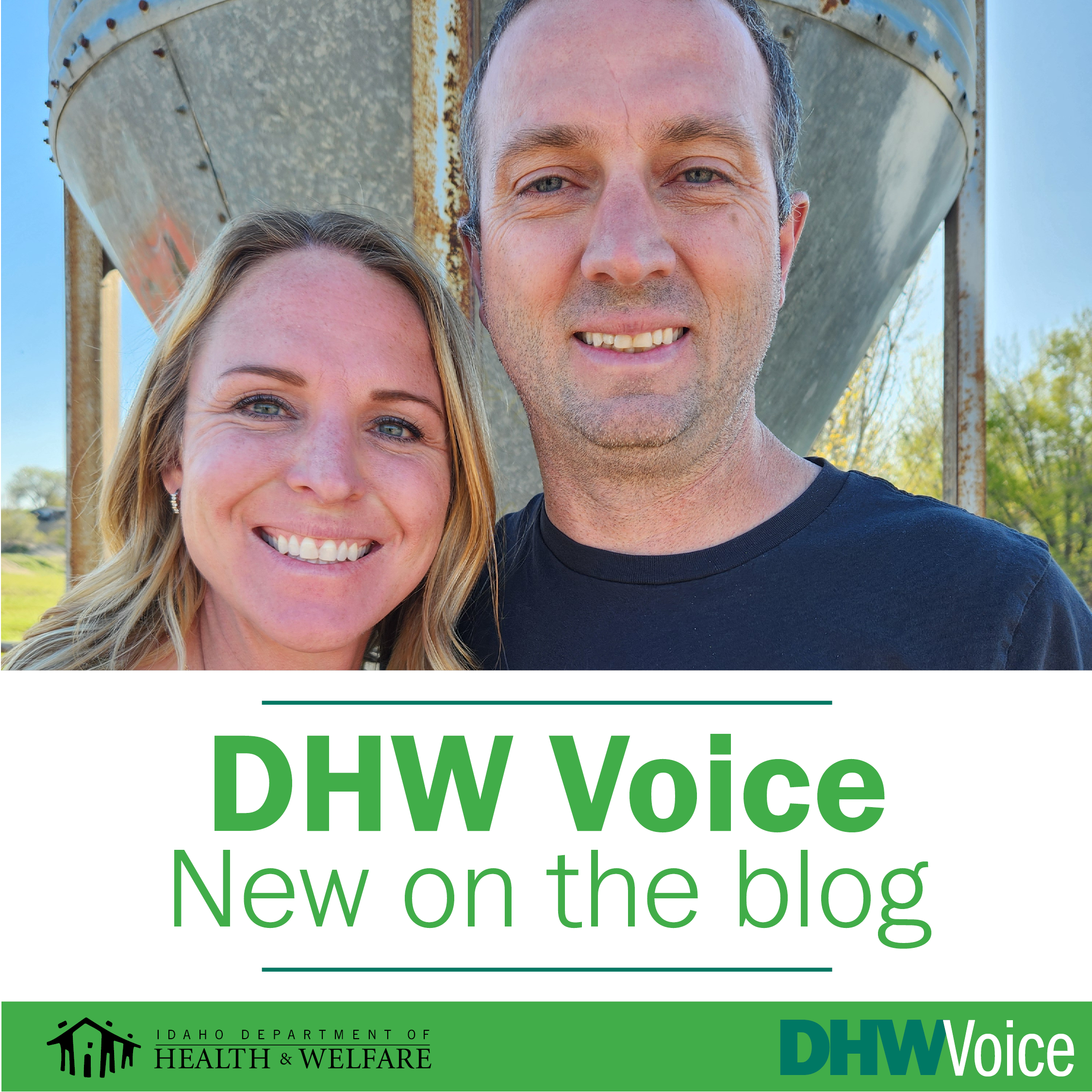
When Jamie told Tyler early in their relationship that she wanted to foster children someday, she meant it. “If he didn’t want that, it wasn’t even an option,” she said. Years later, the couple has fostered more than 20 children—short-term, long-term, and everything in between—and their journey together as foster parents has been filled with challenges and joy. (Follow this link to view a video version of their story.)

They are a family that thrives outdoors—camping, biking, road-tripping, and cramming as many as six kids into their camper at a time. At home, they’re raising three children of their own, with the oldest away at college. They foster with open arms, welcoming kids into both their routines and their hearts.

At first, Tyler thought their path of fostering would lead to adoption. But they quickly discovered a deeper calling: reunifying foster kids with their biological parents. 

“We quickly learned our priority is to get kids back to bio parents,” he said. That shift wasn’t instant for Tyler. It took time, and it took witnessing the process firsthand. “It was well into our second placement before I bought in,” he said. “It took time to adapt to that and change my mind about how I see everything.”

The emotional toll is real. “There have been times Jamie has said, ‘I’m done,’” Tyler admitted. “And I’m like, ‘Oh no.’” 

But in those moments, they lean on each other. 

“It’s not just about dragging each other through—it’s helping to lift each other back up,” Tyler said. That partnership, they say, is essential. So is communication. Before taking any placement, they talk it through. “If one of us second guesses it, we don’t take it,” Tyler said.

Even the joy comes with cost. Watching children reunite with their families is bittersweet. 

“Sometimes they get more care than our own kids,” Tyler said with a hint of humor and honesty. “But when it’s good, it’s rewarding.” 

They’ve cried when children leave, even those who stayed just a few days. But they treat every child the same— “whether they’re with me for a day, a week, or a year,” Jamie said. “I still love on them just like they’re my own.”

One of their most transformative experiences was their first placement, when they still thought they were fostering to adopt. As they got to know the parents—a couple battling substance abuse—their perspective shifted. 

“Watching them change, physically and emotionally, was humbling,” Jamie said. “To be the one raising their children while they worked so hard—that was a privilege.”

Tyler found meaning in watching their own children learn from these experiences, too. 

“It’s good to see how our kids welcome them and grow from it,” he said. And their own family has grown in empathy and awareness. 

It’s not always easy. Some losses leave them needing time to reset, even months. But they take that space when needed. “You’ve got to take your self-care into consideration,” Tyler said. And when they’re ready, they open their home again.

To anyone considering fostering, their message is clear: do it. Try respite. Try a short-term placement. Just try. “Whether it’s short or long term, we keep our same path,” Tyler said. “We treat them just like we do our own kids.”

Because for Jamie and Tyler, being a foster parent isn’t about being a savior. It’s about being steady. Being kind. Being there. And maybe getting to see a family heal—and knowing you were part of making that possible.

Idaho needs foster parents

If you’ve ever considered fostering, know that your willingness to offer a home—even for one child for one season—can change a child’s life forever. For more information, call 2-1-1 or visit the Department of Health and Welfare’s foster care page. You could be the difference that turns a story of struggle into one of hope and belonging.

The Idaho Department of Health and Welfare is dedicated to strengthening the health, safety, and independence of Idahoans. Learn more at healthandwelfare.idaho.gov.

Join the Discussion

Please note the following terms of participation in commenting on the DHW Voice blog.

To ensure a productive discussion you agree to post only comments directly related to this post and to refrain from posting obscenities; threatening, abusive or discriminatory language; sexually explicit material; and other material that would violate the law if published here; promotional content; or private information such as phone numbers or addresses. DHW reserves the right to screen and remove inappropriate comments.

Foster Family Night at Boise Hawks game showcases the power of partnership

June 12, 2025
Monty Prow, DHW Deputy Director
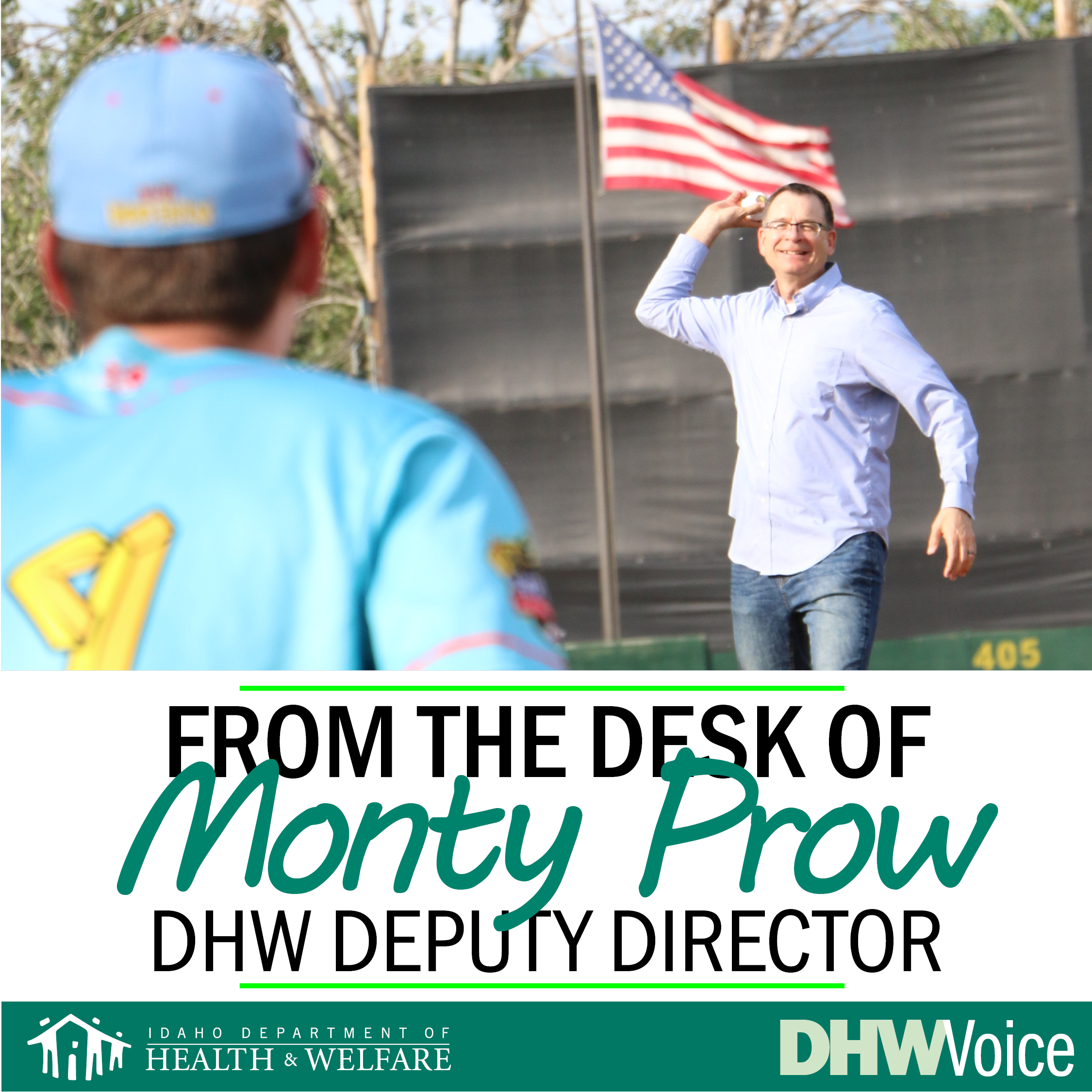
DHW Deputy Director Monty Prow throws one of the opening pitches at Foster Family Night June 6.

Idaho’s foster families were guests of honor at Memorial Stadium on June 6 for Foster Family Night — an event that brought community partners together to celebrate the strength, compassion, and impact of foster care in Idaho.

Hundreds of Idahoans, including many foster families, filled the stands as the Boise Hawks faced off against the Ogden Raptors in Garden City. While the final score (an 8–6 Hawks loss) mattered to some, the night’s true victory was in the show of unity and appreciation for the families who open their hearts and homes to children in need.

The event was made possible by a coalition of partners — the Hawks, Department of Health and Welfare, Foster and Hart, Freedom Youth Foundation, and Project Filter — all of whom played a role in making the evening memorable. Their presence was felt in digital billboards around the stadium and through announcer shoutouts that highlighted their dedication to improving the lives of Idaho’s children and families.

More important still, Foster Family Night was just one example of the broader, statewide collaboration required to support foster youth. Across Idaho, nonprofits, state agencies, local communities, health providers, mentors, educators, lawmakers, business owners, and volunteers all play a role in building a system that helps children and families thrive. It’s a shared responsibility — and a shared opportunity.

Events like Foster Family Night are a reminder that meaningful change doesn’t come from a single group or effort. It comes from all of us — working together and showing up for kids and families when it matters most.

Raising a child, especially one in foster care, takes a village, and in Idaho that village is strong.

Monty Prow is Deputy Director over Child, Youth, and Family Services at DHW. 

Join the Discussion

Please note the following terms of participation in commenting on the DHW Voice blog.

To ensure a productive discussion you agree to post only comments directly related to this post and to refrain from posting obscenities; threatening, abusive or discriminatory language; sexually explicit material; and other material that would violate the law if published here; promotional content; or private information such as phone numbers or addresses. DHW reserves the right to screen and remove inappropriate comments.

Saving Lives: Gene and Sandy celebrate a lifetime of accepting youth into their home

May 16, 2025
DHW Communications

For 12 years, Gene and Sandy tried to have a child. Gene worked as a pastor in Jerome, and she taught special education. They seemed destined to raise children in a loving, stable home, but it didn’t happen. They grew frustrated and burdened with all that love and no child to give it to. They prayed on it.

“Some people know why they're on the planet,” Gene said. “My wife is on the planet to be a mom.”

It’s said that God works in mysterious ways, and tests us to see if we can unlearn our own intentions, rip up our own plans, and discover a life that gives. (Follow this link to watch a video version of Gene and Sandy's story.)

They dared not wait for biology, and society provided. They adopted two babies from families they knew, and then when a mother in their church learned that her children might be removed from her home, Gene and Sandy chose to become foster parents.

“We were licensed one day and had two boys the next day,” Sandy said. “One of them was autistic, and the other boy was angry.”

Part of the reason Sandy said she wanted to wait to have her own children before fostering, is because she couldn’t let them go. To welcome a child and say farewell, it’s difficult. They knew that they’d want to keep every youth who entered their home.

Those first two boys? Gene and Sandy adopted them. They were the first of six boys they’d adopt out of foster care. That angry boy is now 26 years old. He is a successful welder and owns his own home.  

“We had very serious talks with him before we would agree to adopt him and his brother,” Sandy said. “And he told us one day, ‘mom and dad, you saved my life. If I had not come to your home, I don't know where I would be today.’”

Two of those youth are diagnosed with low-functioning autism spectrum disorder, and another with Asperger’s Syndrome. As a special ed educator, Sandy was uniquely positioned to help them, but she hopes that other parents who are less experienced will take the time, study the disorders, and open their homes to special needs youth.

At one point they had 10 children in their home, with their adopted children, foster children—and their miracle baby. After years of trying, they conceived, and Sandy gave birth to a little girl.

“I saw [Sandy] light up with these first two babies, and then we had a biological child, and they brought such joy and passion out of her. I wanted to help her in that kind of ministry.”

The little girl fit right in with this big mixed family with meager means living in an old church. If they wanted more, they were quiet about it.

“We had a lot of children in our home with different needs, different abilities, and different personalities,” Sandy said.

Those differences included behavioral health concerns and developmental disabilities. At school, the autistic youth was being put in an extended resource inclusion room and left there. Sandy felt like they could do better.

“I had to advocate for that child,” Sandy said. “Those are things that you have to do as a foster parent when you receive these children. They have a special need, not only just trauma, but some of them do have special needs as far as autism, ADHD, other things that they have to deal with.”

Gene is not a special ed professional. He’s a pastor, custodian, salesman, and a philosopher of sorts. He was short on experience with special needs youth, but he went the distance by caring, mentoring, and fathering a series of boys and girls who didn’t have father figures.

“Adoption and even foster care were an answer to our prayers in a profound way,” Gene said. “When we were fostering, if we could have taken them all in, we would have. There were times, though, that we had to say no just because we didn’t have enough space.”

But if they could, they helped. They helped children flourish, or just rest. They had youth who would run away and others who’d never let them go. They learned “a process of developing yourself” as Gene put it.

They never had to develop alone. The Department of Health and Welfare caseworkers, counselors and staff lent incredible support. They knew how to find resources for the children, helped with evaluations and medical care

“You have a network behind you, a team of people,” Gene said. “Each child had their individual unique needs, and we had a whole network of people we could turn to, and they were very responsive at helping us to be able to navigate some of those challenges.” They are now grandparents, with a house filled by the sounds of children.

Idaho needs foster parents

If you’ve ever considered fostering, know that your willingness to offer a home—even for one child for one season—can change a child’s life forever. For more information, call 2-1-1 or visit the Department of Health and Welfare’s foster care page. You could be the difference that turns a story of struggle into one of hope and belonging.

The Idaho Department of Health and Welfare is dedicated to strengthening the health, safety, and independence of Idahoans. Learn more at healthandwelfare.idaho.gov.
Join the Discussion

Please note the following terms of participation in commenting on the DHW Voice blog.

To ensure a productive discussion you agree to post only comments directly related to this post and to refrain from posting obscenities; threatening, abusive or discriminatory language; sexually explicit material; and other material that would violate the law if published here; promotional content; or private information such as phone numbers or addresses. DHW reserves the right to screen and remove inappropriate comments.

Foster families connect at Bruneau Dunes State Park

May 7, 2025
IDHW Communications

More than 150 foster parents and foster children gathered last Saturday at Bruneau Dunes State Park to launch the second year of the Foster Family Passport Program—a growing partnership between the Idaho Department of Health and Welfare (DHW) and Idaho Department of Parks and Recreation (IDPR). 

The strong turnout reflected both the success of last year’s pilot and the excitement around this year’s expanded offerings. With free annual access to Idaho state parks, the Passport Program gives foster families a chance to spend quality time outdoors, explore nature, and build memories together.

Saturday’s event brought together an incredible team of contributors and supporters. Key partners like Regence BlueShield of Idaho, Idaho Business for the Outdoors (IBO), and new sponsors such as the Capital City Kiwanis Club, Charles Schwab Boise Branch, Idaho Botanical Garden, and Micron helped make the day a success. Their time, donations, and volunteer efforts helped make sure families felt welcomed.

Highlights included hiking the park’s famous 470-foot dune, fishing with Idaho Department of Fish and Game, learning how to set up a campsite, and participating in hands-on STEM activities. Families explored educational booths, visited the park’s planetarium, viewed the sun and moon through telescopes, and joined the Idaho State Park Junior Ranger program—led by mascot Scout and IDPR staff.

More than 100 volunteers greeted families with gift bags, raffle prizes, and smiles. For some kids, it was their very first visit to an Idaho state park—a meaningful milestone in a safe, supportive setting.

This growing initiative builds on the foundation laid by the Idaho Legislature’s and Gov. Brad Little’s $23 million investment in child welfare this year, aiming to provide foster families with not just resources—but community, connection, and positive experiences.

More Fostering Family Adventures are planned across Idaho this summer, so stay tuned. We’re just getting started!

Idaho needs foster parents

If you’ve ever considered fostering, know that your willingness to offer a home—even for one child for one season—can change a child’s life forever. For more information, call 2-1-1 or visit the Department of Health and Welfare’s foster care page. You could be the difference that turns a story of struggle into one of hope and belonging.

The Idaho Department of Health and Welfare is dedicated to strengthening the health, safety, and independence of Idahoans. Learn more at healthandwelfare.idaho.gov. 

Join the Discussion

Please note the following terms of participation in commenting on the DHW Voice blog.

To ensure a productive discussion you agree to post only comments directly related to this post and to refrain from posting obscenities; threatening, abusive or discriminatory language; sexually explicit material; and other material that would violate the law if published here; promotional content; or private information such as phone numbers or addresses. DHW reserves the right to screen and remove inappropriate comments.

Thinking ahead about the possibility of measles in Idaho

April 28, 2025
Dr. Christine Hahn, Division of Public Health

As Idahoans, we value our health, our families, our independence, and our communities. With recent measles outbreaks reported in several U.S. states, including Montana, it's a good time to consider how we can stay informed and prepared.

Understanding measles

Measles is a highly contagious respiratory disease caused by a virus. It spreads through the air when an infected person coughs or sneezes and can linger in the air for up to two hours. Symptoms typically appear seven to 14 days after exposure and include high fever, cough, runny nose, red eyes, and a distinctive rash. While many recover without problems, measles can lead to serious complications, especially in very young children and people with weakened immune systems.

Before we had a vaccine, almost all people got measles at some point in their lifetimes. In Idaho, over 1,000 cases were reported most years in the 1950s. 

The introduction and widespread use of vaccination began in the 1960s. The measles vaccine is highly effective, and for most people, two childhood doses of vaccine is all they will ever need to protect themselves against measles for their lifetime. 

Reported cases of measles have dropped dramatically since the 1960s, and in most recent years, no cases are reported in the state. 

While widespread vaccination was very successful at eliminating measles in the U.S., international travelers continue to reintroduce the virus, which has spread among mostly unvaccinated communities. This highlights the important role of continued vaccination to protect people and communities from the disease.

In 2024, cases of measles began to increase in the U.S.. So far in 2025, there have already been more cases than in all of 2024, with an especially large number of cases being reported in Texas and New Mexico. While no cases have been reported yet in Idaho, the summer travel season is beginning, and I am concerned that we will see cases in the state.

Staying informed and prepared

Here are some steps you can take to stay informed about measles:

  • Know the signs: Familiarize yourself with the symptoms of measles to recognize it early.
  • Check your records: Review your and your family's immunization records to understand your health history.
  • Consult healthcare providers: If you have concerns or questions about measles or your health, reach out to your healthcare provider for personalized advice.
  • Stay updated: Follow reputable sources like the CDC, the American Academy of Pediatrics and your local public health district for the latest information about any measles in your area and other health topics.

Community health

Being informed helps protect not just ourselves but also our communities. By understanding measles and how it spreads, we can make choices that contribute to the well-being of those around us.

Q&A: Common questions about measles

How serious is measles?

Measles can be serious, especially for young children and individuals with compromised immune systems. Complications can include pneumonia, encephalitis (brain swelling), and, in rare cases, death.

How does measles spread?

Measles spreads through the air when an infected person coughs or sneezes. The virus can remain in the air for up to two hours, making it highly contagious.

What should I do if I think I've been exposed to measles?

If you believe you've been exposed to measles, contact your healthcare provider immediately. They can guide you on the next steps, which may include monitoring for symptoms or receiving post-exposure prophylaxis.

How can I protect myself and my family from measles?

Staying informed about measles, understanding how it spreads, and consulting with healthcare providers about your health history are key steps in protecting yourself and your family.

Historically, vaccination has played a crucial role in preventing measles, eliminating it from circulating in the U.S. by the early 2000s. However, cases have jumped in 2024 and increased even further in 2025. Vaccination remains the surest way to prevent the disease.

Where can I find more information about measles?

Reliable information is available through the Centers for Disease Control and Prevention (CDC) at www.cdc.gov/measles and the Idaho Department of Health and Welfare at www.healthandwelfare.idaho.gov

Dr. Christine Hahn is Idaho’s state epidemiologist and the Division of Public Health’s medical director. 

The Idaho Department of Health and Welfare is dedicated to strengthening the health, safety, and independence of Idahoans. Learn more at healthandwelfare.idaho.gov

Join the Discussion

Please note the following terms of participation in commenting on the DHW Voice blog.

To ensure a productive discussion you agree to post only comments directly related to this post and to refrain from posting obscenities; threatening, abusive or discriminatory language; sexually explicit material; and other material that would violate the law if published here; promotional content; or private information such as phone numbers or addresses. DHW reserves the right to screen and remove inappropriate comments.

NFL’s Scott Matlock returns to Boise to uplift foster youth

April 25, 2025
DHW Communications

Scott Matlock has serious game—both on the football field and in digital gaming arenas. But it’s his big heart that stood out last week when he used his unique platform as a former Idaho foster youth, rising NFL star, and passionate gamer to inspire local   foster kids in downtown Boise. 

Student athletes with Boise State Esports hosted an event at their downtown arena Thursday, April 17, where dozens of youth in foster care and their families were able to tour the world-class gaming facility, meet Matlock, and play videogames with him and members of Boise State’s varsity Esports team. 

“Now that I’m in the league, I want to use my platform to help people who were in my shoes,” he said. “It’s really cool to be able to do that now.”

Throughout the day, Matlock offered high fives and fist bumps, signed autographs on everything from t-shirts to footballs, and played family-friendly games like ‘Fall Guys” with foster youth. He even squared off against Boise State’s varsity squad in a few competitive rounds of League of Legends.

He also gave a heartfelt and fun 30-minute interview on Boise State’s Twitch feed, sharing insights about being raised in foster care, playing football for Boise State, and, of course, his passion for gaming.

Matlock, who grew up in foster care in Idaho, started playing football in high school and quickly discovered that his 6-foot, 4-inch frame, innate skill, and dogged work ethic were suited to sports, and the gridiron in particular. He went on to play for the Boise State Broncos and, since 2023 the Los Angeles Chargers where he’s become one of the NFL’s only players working on the offensive and defensive sides of the ball.

During his interview with Boise State Esports host Jacob Palmer, Matlock shared personal stories about growing up in foster care, advice for youth in the system today, football memories from the blue turf, and his favorite gaming moments—mixing humor with heartfelt reflections.

In a poignant moment, Palmer asked Matlock what advice he had for foster youth who were there in the room with him.

“There’s always light at the end of the tunnel no matter how dark it may seem,” Matlock said. “There was always light for me that I saw at the end of the tunnel. I just stayed the course and focused on the things that matter right now which was growing up, being a kid, going to school, making friends.

“I had a lot of people helping me, keeping me on the right track and the right path, so definitely this (being in foster care) is not the end all, be all.”

The Idaho Department of Health and Welfare is dedicated to strengthening the health, safety, and independence of Idahoans. Learn more at healthandwelfare.idaho.gov.

Join the Discussion

Please note the following terms of participation in commenting on the DHW Voice blog.

To ensure a productive discussion you agree to post only comments directly related to this post and to refrain from posting obscenities; threatening, abusive or discriminatory language; sexually explicit material; and other material that would violate the law if published here; promotional content; or private information such as phone numbers or addresses. DHW reserves the right to screen and remove inappropriate comments.